Good safari packing is about adaptable layers, modest quantities and equipment that solves real needs. You do not need a new khaki wardrobe, but you do need sun protection, a warm layer for early starts and luggage that fits your transport plan.
Start with the luggage rules
International airlines and domestic safari flights may have different allowances. Light aircraft commonly require soft-sided bags because storage compartments are small and rigid suitcases are difficult to load. Confirm both weight and bag dimensions for every flight on your itinerary.
Ask for the exact domestic-flight allowance and whether excess luggage storage is available. Do not assume the allowance shown on your international ticket applies inside Tanzania.
Clothing for safari days
Choose lightweight, breathable clothes in neutral shades and bring enough to rotate while laundry is arranged. Long sleeves and trousers provide sun and insect protection. Bright colours are not forbidden in most safari vehicles, but muted colours are less visually intrusive on walks and easier to combine.
- Three to five lightweight shirts, including long-sleeved options.
- Two or three comfortable trousers or safari-appropriate shorts.
- A fleece or warm mid-layer for dawn and highland evenings.
- A light waterproof jacket during rainy periods.
- Comfortable closed shoes plus sandals for camp.
- Underwear, sleepwear and a swimsuit where relevant.
Avoid camouflage-pattern clothing because it can be associated with military use. Laundry practices vary, and some properties do not wash personal undergarments, so pack accordingly.
Prepare for temperature changes
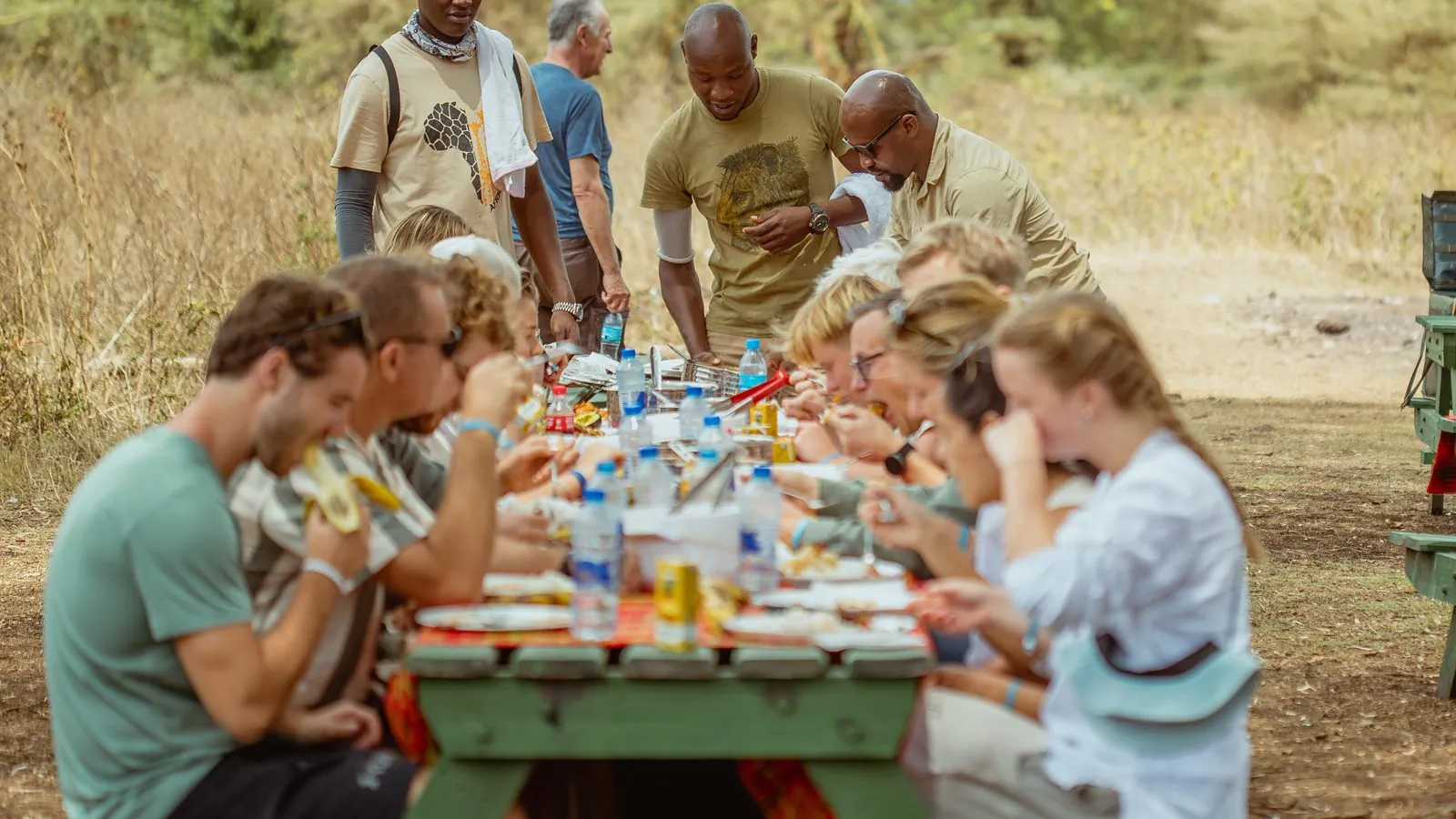
An open-air breakfast near Ngorongoro can feel cold even when the afternoon is warm. The Serengeti may be dusty late in the dry season and surprisingly cool before sunrise. Zanzibar is generally warmer and more humid, where loose clothing and respectful coverage away from the beach are appropriate.
What belongs in the day bag
- Binoculars, camera and spare batteries.
- Reusable water bottle.
- Hat, sunglasses and high-protection sunscreen.
- Lip balm, tissues and hand sanitiser.
- Personal medication and copies of prescriptions.
- A warm layer that remains accessible.
- A small dry bag or protective pouch for electronics.
Keep valuables and essential medicine with you rather than in checked luggage. A compact headtorch is useful in tented camps where paths may be dim after dinner.
Camera and power planning
A telephoto lens is helpful, but binoculars often improve wildlife appreciation more than another heavy lens. Bring adequate memory cards, labelled batteries and the correct plug adapter. Tanzania commonly uses British-style Type G sockets, although some properties offer universal outlets or charging stations.
Dust can enter equipment during dry-season drives, so carry a blower and simple cleaning cloth. Change lenses inside the vehicle only when conditions allow and keep electronics protected from sudden rain.
Health and personal items
Discuss vaccinations, malaria prevention and personal medical needs with a qualified travel-health professional. Pack insect repellent, any prescribed medication, oral rehydration salts and a few familiar remedies, while avoiding an oversized pharmacy.
Keep medicine in original packaging and carry documentation for controlled prescriptions. Travel insurance details and emergency contacts should be available offline.
Documents and money
Carry your passport, visa documentation where applicable, insurance certificate, flight details and operator contact information. Store encrypted digital copies separately. Small cash denominations can be useful for tips and incidental purchases, while payment options differ between remote lodges and towns.
Pack with less waste
Use refillable bottles and toiletry containers, decline unnecessary packaging and avoid bringing disposable items that are difficult to manage in remote areas. Tanzania restricts certain plastic carrier bags, so use reusable packing organisers instead.
What to leave at home
Skip hard-sided luggage when light aircraft are included, excessive jewellery, strongly scented products and clothing that only works for one photograph. Drones require permissions and are unsuitable for casual use in protected areas. Heavy books and duplicate electronics add weight quickly; download reading material and share chargers where practical. Most lodge evenings are relaxed, so formal clothing is rarely necessary unless a particular property has advised otherwise.
Adjust for Kilimanjaro or Zanzibar
Kilimanjaro requires a much more technical cold-weather and sleeping system; read the complete Kilimanjaro guide. For Zanzibar, add breathable modest clothing, reef-conscious sun protection where available and water-friendly footwear. A combined trip may require luggage storage or repacking before a domestic flight.
The final 24-hour check
Weigh the packed bag, charge every battery, download documents, move medication into hand luggage and check the forecast for your first region. Then remove the “just in case” items you can easily do without. A lighter, organised bag makes every transfer easier.
Pack by transfer, not only by destination
Divide essential items so a delayed checked bag does not stop the safari: medicine, documents, one change of clothing, chargers and any irreplaceable prescription equipment belong in cabin baggage within airline rules. For light-aircraft sectors, repack into a soft bag before the airport and arrange storage for hard cases. Confirm whether laundry is available and whether it excludes undergarments or delicate fabrics.
Keep a small daily pouch with sunscreen, lip balm, tissues, dust protection and spare camera power. It should close securely so nothing falls from an open vehicle. Avoid overloading the seat area with multiple bags. A compact, organised kit lets travellers respond to cold, heat or a sudden shower without delaying the group.
Pack for transfers and delays before packing for photographs
Passport, necessary medicine, insurance details, chargers, one change of clothing and any irreplaceable prescription equipment belong in cabin baggage within airline rules. A delayed checked bag should not stop the first safari day. If domestic light aircraft are included, confirm bag shape and weight before leaving home; a hard case accepted internationally may not suit the next sector. Arrange storage for excess luggage rather than negotiating at a small airstrip.
Use packing cubes or simple bags to divide dawn layers, hot-afternoon clothing and daily camera items. Laundry can reduce volume, but ask what a camp offers, how quickly it returns and whether delicate items are excluded. Neutral colours are practical on dusty drives and walks; expensive safari-branded wardrobes are not required. One warm layer, effective rain shell and broken-in footwear are more valuable than many specialised outfits.
Create a small kit that lives beside the seat
Sunscreen, lip balm, tissues, dust protection, binoculars, water and spare camera power should fit in one secure pouch. It must close so nothing falls from an open vehicle and remain small enough not to crowd another traveller. Keep medication at its required temperature and tell the operator if refrigeration is essential. Refill systems are preferable to carrying large numbers of disposable bottles when safe water is provided.
A mountain or beach extension needs a separate equipment check. Kilimanjaro layers and sleeping systems belong to the operator’s detailed list; reef or diving equipment must fit airline and boat arrangements. Do not assume one bag works for every stage. Review Kilimanjaro preparation for a climb and Tanzania beach planning for the coast, then ask one planner to reconcile the complete baggage route.
- Keep documents, medicine and one usable outfit in cabin baggage.
- Confirm soft-bag size and weight for every domestic flight.
- Use a compact, closable daily pouch inside the safari vehicle.
- Bring warm dawn layers, sun protection and a rain shell regardless of season labels.
- Test boots, adapters, headlamps and camera charging before departure.
Packing for comfort, access and different bodies
Travellers who use mobility aids, injectable medicine, hearing devices or other specialist equipment should discuss storage, charging and vehicle access before travel. Bring spares or consumables that may not be easy to replace outside major cities, plus a clinician’s letter where appropriate. A packing list written for an able-bodied photographer is not universal. The operator can advise about steps, tent paths, refrigeration and luggage handling only when the need is shared early.
Families can simplify by assigning each child one small day bag with a warm layer, water and quiet activity, while adults control medicine, documents and electronics. Avoid loose toys inside an open vehicle and pack familiar snacks only within import and camp rules. A few carefully chosen items help more than a large suitcase that must be repacked for every flight. Comfort comes from having the right thing accessible, not from bringing every possible thing.
Before closing the bag, conduct a “one day without checked luggage” test. Set aside everything needed to clear immigration, take essential medicine, contact the operator, sleep one night and join a basic game drive. If those items do not fit safely in cabin baggage, reorganise. The exercise is more useful than adding another outfit, because it tests the disruption most likely to affect the beginning of the journey.